Buried on Page Four: The Free Business Advice Your Council Already Pays For
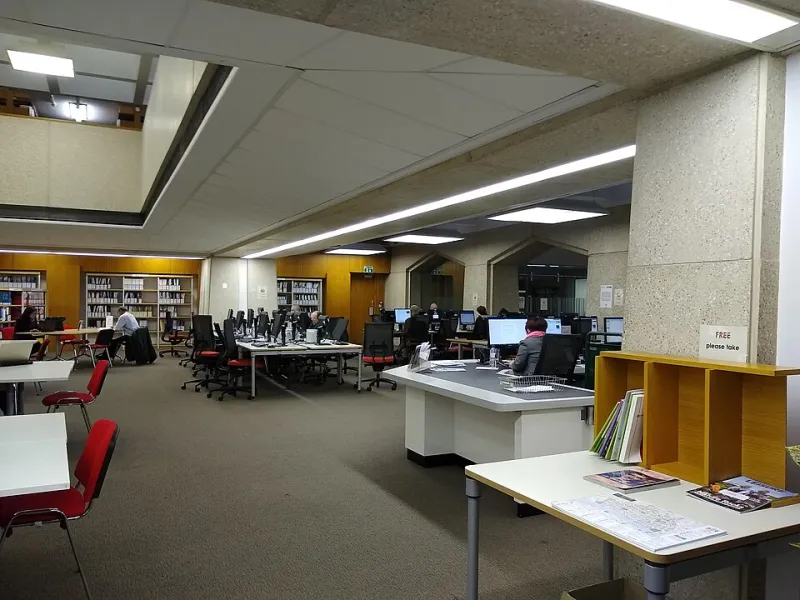
Photo: Philafrenzy, CC BY-SA 4.0, via Wikimedia Commons
A friend of mine paid £380 for a one-day 'Start Your Business' course last year. It was fine. The following month she found out her local library ran a nearly identical session, free, with a follow-up one-to-one slot and a free database subscription thrown in. She was not impressed.
This is not an unusual story. Councils, libraries, adult education services and local networks quietly fund a fair amount of startup support, and most of it is advertised badly. Not deliberately — it just lives under headings nobody thinks to search for.
What is actually out there
Bear in mind that provision varies wildly by area, and it has been reshuffled more than once in recent years. What one council runs, its neighbour may not. Treat the list below as a set of places to look, not a guarantee.
Council economic development teams. Often the ones holding the budget. They may run business hubs, startup programmes, grants, rate relief advice, or free one-to-one sessions with a contracted adviser.
Libraries. Several city libraries host Business & IP Centre services, offering free access to market research databases, intellectual property clinics and workshops. Even without that, most library services have business reference collections and free wifi, and some run regular drop-ins.
Adult and community education. Evening classes in bookkeeping, digital marketing or web basics, sometimes free or heavily subsidised depending on eligibility. Not branded as business support, but often the cheapest route to a specific skill.
Local growth and enterprise organisations. Chambers of commerce, business networks and university enterprise hubs. Universities in particular often open their startup programmes to local residents, not just students.
Markets and property. If your idea involves physical selling, the markets team can tell you about pitch fees, trader licences and casual pitches. Boring, genuinely useful.
Searching a council site without losing the will
The search box on a council website is usually poor. Skip it and try these instead, in a normal search engine with the site restriction:
- site:[council domain] business support
- site:[council domain] start a business
- site:[council domain] economic development
- site:[council domain] business grants
- site:[council domain] business hub
Also worth trying: 'enterprise', 'self-employment', 'procurement' and 'town centre'. And check the neighbouring council and the county council, because in two-tier areas the responsibility for economic growth is often not where you would expect. If your area has a combined authority or a regional mayor, that body may hold the business support budget too.
When you find a page, note the date on it. A surprising amount of business support content is several years stale with a dead email address at the bottom.
The phone call that saves you an evening
Once you have a number, ring it. Email gets ignored; a short call gets a name.
Ask these four questions and write the answers down:
- Who runs startup support for residents in this area at the moment?
- Are there free one-to-one adviser appointments, and how do I book one?
- Is there a mailing list or events calendar I can join?
- Is there anything specific for my sector or my stage — pre-trading, first year, or growing?
The answers tell you whether you have reached the right team. If the person sounds vague, ask to be transferred to economic development, and if that fails, try the library service.
Vetting a session before you give up an evening
Free does not mean neutral. Some sessions are run by private firms using a council venue as a shop window, and you will notice roughly twenty minutes in when the slide deck turns into a pricing page.
Before you book, check:
- Who is delivering it. A council officer, a contracted advice service, a college, or a company?
- The format and size. A twelve-person workshop with a workbook beats a three-hundred-person webinar almost every time.
- Whether there is a follow-up. A single session with no route to a second conversation is entertainment, not support.
- What you need to bring. Anything asking for detailed financials on the day is probably a sales pipeline.
None of that makes a paid provider bad. It just means you should know what you are sitting in.
The one-workshop rule
Here is the discipline that stops free support becoming a hobby in itself. After any session or adviser call, you leave with exactly three things written down:
- one named next step you will take within seven days
- one person and one contact detail
- one date in the diary for a follow-up
That is it. 'Research things more' is not a next step. 'Fill in the first three sections of a cashflow sheet by Friday' is. If a session gives you nothing that survives that test, you have learned something useful about where not to spend your time.
Keep a small log
A single notes file is enough: date, who you spoke to, what they offered, what they said about eligibility, and what you did next. Support programmes change staff and funding frequently, and a two-line record from six months ago will save you re-explaining your whole idea to a new adviser.
What this will and will not do
It will not write your business plan for you, and it will not secure you a grant — most grants are competitive, narrow, and oversubscribed. Adviser quality varies, and a free session is only as good as the person running it.
But it will cost you an hour of searching and a phone call, and it may hand you a named contact, a free database, a subsidised course and a clearer sense of what to do next. That is a decent return on an afternoon, and it is already paid for.