Start With the Stubborn Ones: The Sensible Order for a UK Name Change
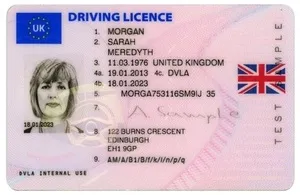
Photo: DVLA, OGL 3, via Wikimedia Commons
Changing your name sounds like a single admin task. In practice it's a relay: one document hands over to the next, and if you run the legs out of order you end up doubling back. The principle is simple — sort the stubborn, photo-bearing anchor documents first, then let everything else follow. Do it the other way round and you'll spend weeks explaining why your bank statement says one thing and your passport says another.
Why the order matters more than the paperwork
Most organisations aren't really checking your name. They're checking that the identity document you've handed over matches the name you've asked them to use. Banks, councils and employers all want to see a passport or driving licence in your new name before they'll update their records. If you start with the bank, you'll likely be told to come back with updated photo ID. If you start with the passport, you skip that loop entirely.
The second reason is quieter: addresses. Plenty of name-change forms also ask for your address history, and a mismatch between the address on your ID and the address on the form is one of the most common reasons for a rejection. If you've moved recently, update your address at the same time as your name where you can.
First: the passport, before the bank
This is the leg people most often try to skip, usually because passport renewals cost money and take time. Do it first anyway. HM Passport Office needs your deed poll, marriage certificate or civil partnership certificate, plus your old passport. Apply online, send the supporting documents by a tracked service, and allow around three weeks for a standard application — longer in busy periods. Don't book a holiday until the new one is back in your hand, because your old passport is cancelled during the process.
Why the passport first? Because it's the photo ID that banks, landlords, councils and employers trust most readily. Once it's in your new name, every subsequent conversation gets shorter.
Second: the driving licence
The DVLA is the other anchor. Changing your name on a driving licence is free if you're only changing the name, though you'll pay if you're renewing the photo at the same time. Send your deed poll or marriage certificate with the licence, use a tracked envelope, and expect roughly two to three weeks. Keep a photocopy of everything before it goes in the post.
If your address has changed too, do both at once. A licence with the right name and the wrong address will trip you up later when you're setting up utilities or proving your address to a council.
Third: HMRC and the benefits system
Once the anchor documents are back, tell HMRC. You can update your name through your personal tax account or by letter. If you're self-employed, do it before your next return. If you claim child benefit or tax credits, those records need the same update — they don't always follow automatically. Allow up to six weeks for everything to filter through, and keep an eye on your tax code in case payroll needs a nudge.
Fourth: banks and building societies
Now the bank visit makes sense. Take your new passport or driving licence, plus your deed poll if they ask for it. Most high-street banks will update your record in branch or through a secure message, and the actual change usually takes one to two weeks.
Joint accounts are the trap here. If one person changes their name, the account still needs to reflect both names correctly. Some banks want both account holders present or both signatures, even though only one person's details are changing. Ask before you turn up. The same applies to joint mortgages and any insurance policy with two named adults.
Fifth: council, NHS and the quiet systems
These are the ones that don't shout about it. Your council needs to know for council tax, the electoral roll, parking permits and any housing or benefits records. The electoral roll matters more than people think — it's used for credit checks, and an old name there can slow down a mortgage application months later.
For the NHS, update your GP surgery first. They'll usually cascade the change to hospital and clinic records, but it's worth mentioning it at your next appointment. Dentists, opticians and any private clinics keep their own records, so tell them directly. Your NHS number stays the same.
Then work through the quiet list: employer payroll and HR, workplace pension, private pension, insurance, utilities, mobile phone, subscriptions, professional registrations, university alumni records and loyalty schemes. None of these will block your life, but each one that keeps your old name is a small future annoyance.
The common traps
- Mismatched addresses. Update your address and name together where possible. A form that shows a new name but an old address is an easy rejection.
- Joint accounts and mortgages. Ask what the bank or lender needs from both people before you go in.
- Systems that quietly keep the old name. Credit reference agencies can hold both names for a while. Check your credit report a few months after the change and ask for corrections if the old name is still showing as current.
- Sending originals without tracking. Use recorded or special delivery, and keep photocopies. Replacing a lost deed poll or certificate is a hassle you don't need.
- Passport timing. Don't plan travel during the passport leg. The old document is cancelled while the new one is processed.
A realistic tick-list
- Order certified copies of your deed poll or certificate (a few days).
- Update your passport (around three weeks, longer in busy periods).
- Update your driving licence (two to three weeks).
- Tell HMRC and benefits (up to six weeks to settle).
- Update banks and joint accounts (one to two weeks).
- Update council, electoral roll and NHS (two to four weeks).
- Work through payroll, pensions, insurance, utilities and subscriptions (varies).
- Check your credit report after three months.
The relay isn't glamorous, but it is finite. Do the stubborn documents first, keep a folder of photocopies and tracking receipts, and the rest of the list becomes a series of short, boring admin jobs rather than a maze of rejections.