The Cheapest Research Room in Town Is Behind a PIN

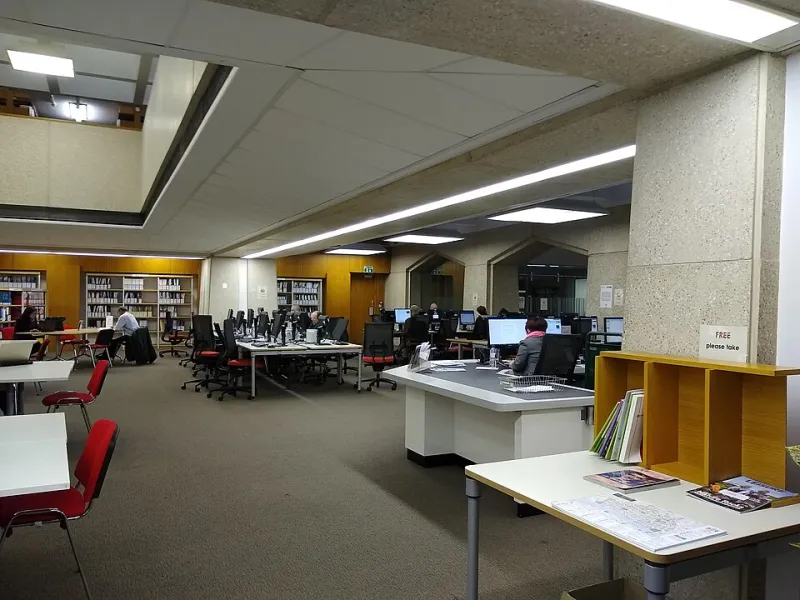
Photo: Library of the London School of Economics and Political Science, No restrictions, via Wikimedia Commons
If you run a small business, or you are thinking about starting one, there is a decent chance you already pay for a research subscription without knowing it. It is not a software package or a consultant on retainer. It is the library card in your wallet, and the PIN you probably set years ago and forgot.
Councils fund library services, and many of those services still buy access to databases that would cost a small fortune if you subscribed as an individual. The exact list changes from council to council, so treat this as a route map rather than a promise. But the principle holds: in 2026, a library membership is often the cheapest research room in the country.
Here is a one-hour login tour you can do at the kitchen table. No need to visit the building unless a resource is only available on site.
Before the hour: find the number and the PIN
Start on your council's library website and look for tabs called Online resources, Digital library or Reference online. Have your library card number and PIN ready. Test one login before you sit down properly, because half the hour can disappear into a password reset.
Note which resources say home access and which say in-library only. Use a laptop rather than a phone. These databases were built for wide screens, and you will want to save links and take notes without losing your place.
First ten minutes: the business shelf
Look for a business database first, not the newspaper archive. Many library services subscribe to COBRA, the Complete Business Reference Adviser, which is a plain-English starting point for sectors, start-up costs and practical regulations. Some areas also have a Business & IP Centre, or BIPC, linked to the British Library network. If yours does, that is the first door to push.
Give yourself one question to answer in this slot: who buys what you sell, what do they pay, and who else is already selling it? Do not browse. A database can eat an hour without telling you anything useful.
Next ten: current market and competitors
This is where services such as PressReader, Newsbank or ProQuest earn their keep. They are good for trade press, local newspapers and interviews with people in your sector. Search your town plus your sector, and save three articles that describe the market in the words customers actually use.
Be honest about the limits. These are news and reference tools, not a replacement for paid market research. They will not hand you a neat number for the size of your local market. They will help you sound less like an outsider, which is often worth more at the start.
Ten minutes on law and rules
Many library services offer legal reference collections, and some offer practical guides through databases such as Oxford Reference or Gale. Use them to understand the vocabulary: licensing, employment terms, data protection, intellectual property. Then verify the current rule on GOV.UK or legislation.gov.uk, and ring your council's licensing team if you need a local answer.
A database is not a solicitor. It is a way to ask better questions before you pay one. If your library has a BIPC, ask what they offer on trademarks and patents, because that is exactly the sort of thing a small business can waste money on by guessing.
Ten minutes on grants and funding
Look for a grant finder through your library or council. Some councils subscribe to funding directories; others simply point to their own business support pages. Search for your sector, your postcode and your stage, then note the deadlines rather than the headlines.
Ignore any list that does not tell you who is eligible, how much is available and when it closes. A grant directory is only useful if it helps you rule things out quickly. Put two realistic deadlines in your calendar and move on.
Last ten: archives and credibility
Newspaper archives are the fun part. The Times Digital Archive, the Guardian archive and local newspaper collections can show you how a high street changed, how a sector was talked about, or what an old competitor promised customers. That is genuinely useful for tone and context.
It is not useful for current facts. Check the date on every page before you quote it. An article from 1998 can tell you something about history; it cannot tell you what a licence costs this week.
What to ignore on the tour
Ignore Ancestry unless you are researching family history. Ignore the language courses and the entertainment streaming. Ignore any academic database that needs a training session before it will answer a simple question. The goal is not to use everything your card unlocks. The goal is to find the two or three resources that answer the questions you actually have.
The bit most people miss: ask a librarian
Librarians are search experts, and they are usually delighted to be asked something other than where the photocopier is. Try: I am researching a small business idea in this sector. Which of your subscriptions would you start with? That question can save you twenty minutes of clicking.
Make it repeatable
Bookmark the resources through the library portal, not the direct database URL, because that is how the login stays valid. Set a thirty-minute slot once a month. Keep a simple research note: the question, the source, the date and what changed your mind.
If your card has lapsed, renew it. If your PIN is lost, reset it. The subscription is already sitting there, paid for out of the council budget, waiting behind a login screen. One hour at the kitchen table is a cheap way to find out what it is worth.